
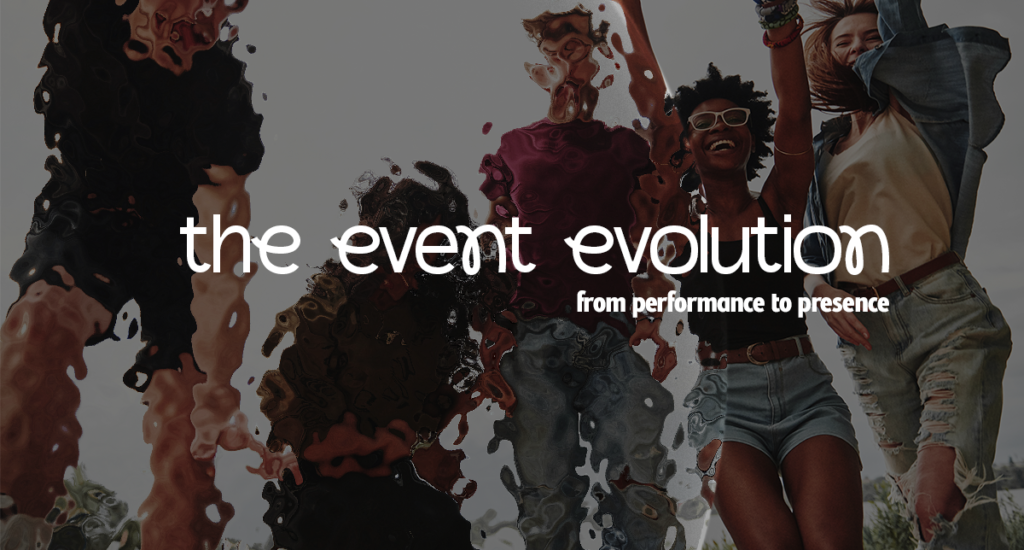
Curated. FOMO-inducing. Influencer-heavy. Exclusionary. It sounds like I’m playing a game of Taboo, but all of these words simply define what has been the performative event era. Over the past few years, you’d see brands spending thousands on photo moments and highly sharable experiences while attendees felt increasingly disconnected from the actual purpose of activation or gathering. Don’t get me wrong; these aren’t ALL bad but if you’ve been paying attention to attendee behavior over the past two years, you’ve noticed something shifting.
The era of performance is ending. The era of presence is back.
Post-pandemic (ish), between 2021 and 2023, event budgets ballooned as brands raced to create the most shareable, most photogenic, most buzz-worthy experiences. According to Allied Market Research, the global events industry reached $1.5 trillion by 2023, with experiential marketing budgets increasing by 8% year-over-year. Yet attendee satisfaction told a different story overtime.
Recent industry research backs up what many of us in the event space have already suspected, perfection-fatigue. The gap between what event organizers prioritize and what attendees actually value has never been wider. While marketers focus on “shareability,” attendees are evaluating events based on entirely different criteria: authentic connection, transparent value, and meaningful experiences. The disconnect was glaring: brands were designing for performance, but attendees were craving presence.
Event professionals observed this massive investment in aesthetic experiences that looked incredible on Instagram but felt hollow in person. Attendees would show up, take the photo, and leave. There was no depth. No connection. No reason to stay.
By mid-2024, the data started reflecting what some event planners and professionals foresaw: the performative model was breaking down.
The COVID-19 pandemic forced a global pause that fundamentally altered how people value their time and attention. When in-person events returned in 2022 and 2023, attendees weren’t just showing up anymore; they were evaluating. Is this worth my time? My money? My energy?
According to Bizzabo’s 2024 Event Benchmarks Report, professionals became significantly more selective about which events they attend post-pandemic, with a clear shift toward prioritizing “meaningful connection” over transactional “networking opportunities.” The language itself reveals the shift: from transactional to intentional.
Industry surveys found that event attendees reported feeling “event fatigue” from experiences that prioritized aesthetics over substance. As one respondent put it: “I’m tired of showing up to beautifully designed events where I leave feeling like I didn’t actually connect with anyone or learn anything valuable.”
The performative model, which is optimized for photos, social proof, and surface-level engagement, couldn’t survive this reckoning. Attendees started voting with their feet, their wallets, and their attention. And smart event professionals should start listening.
So what does the evolution from performance to presence actually look like in practice? After analyzing recent attendee behavior research, industry trends, and my personal hands-on experience designing events and activations for brands, I’ve identified four core shifts defining this evolution:

The days of charging premium prices for brand clout alone are over. Attendees in 2025 and beyond want transparent, intentional pricing that reflects actual value delivered.
According to recent industry research, 55% of event-goers now say affordability is “very important” when deciding whether to attend, significantly up from previous years. But “affordability” doesn’t just mean “cheap” as much as it means value alignment. The current economy is taking a nosedive and in these times, people still want entertainment and to engage with others, while also desiring to make their dollars go further for them.
Millennials continue to favor early-bird pricing for its practicality and planning benefits. Gen Z, meanwhile, gravitates toward group discounts that transform attendance into a social experience, with many reporting they’re more likely to attend an event if group pricing makes it affordable to bring friends.
The most telling finding? Nearly half of attendees prefer bundled, all-inclusive pricing over itemized add-ons, citing transparency and ease of decision-making as key factors. Event professionals consistently report: “People don’t want to feel nickel-and-dimed. They want to know upfront what they’re getting and that it’s worth it.”
Interestingly enough, 68% of attendees said they won’t spend more than $30 on events labeled “budget-friendly,” suggesting that pricing language matters as much as the actual price point. If you’re going to market affordability, it needs to be genuinely accessible, not just less expensive than your premium tier.

One of the most significant shifts in event marketing over the past two years has been the collapse of traditional advertising effectiveness and the rise of peer-driven discovery.
Recent research found that 53% of people now discover events through recommendations from people they follow on social media, while only 19% discover events through paid advertising. The gap is only widening: by early 2025, organic word-of-mouth was driving significantly more event registrations than paid campaigns.
But here’s what makes this shift interesting: this is not about influencer marketing in the traditional sense. Influencer marketing and endorsements are seen as heavily polished content used for promotions, ergo, deemed less trustworthy or authentic by potential attendees. More than half of potential event attendees trust “real-life word-of-mouth” from friends, colleagues, or community members over paid promotions from influencers. Micro-influencers and community advocates [people with 1,000-10,000 followers who genuinely believe in your event, brand or cause] drive significantly higher conversion than celebrity or macro-influencer partnerships.
Industry data backs this up: 48% of surveyed attendees said they need to hear from “trusted voices” before feeling confident about attending an event, with “trusted” defined as personal connections, respected community figures, or event organizers who show up authentically vs. corporate brand accounts.

The where of your event has become as important as the what, and attendees are making decisions based on whether the venue itself adds value to the experience.
Recent industry surveys show that 44% of respondents said they’re more likely to spend money on events held in unique or culturally significant venues, compared to just 28% who said the same about traditional event spaces like hotel ballrooms or convention centers. This represents a massive shift in how attendees evaluate the total event experience.
But get this: it goes deeper than just “cool spaces.” According to industry data, 89% of event attendees now want events that connect them to the local community, with 42% actively seeking to support local businesses through their event attendance. An additional 38% said they want events that “celebrate local cultures” rather than generic, could-be-anywhere experiences. Despite, or perhaps due to the nation’s current events, diversity and culture matter more than ever.
This explains why neighborhood-focused events, partnerships with local businesses, and venues with historical or cultural significance are seeing higher engagement and satisfaction scores. Event professionals consistently observe that when organizers choose culturally significant venues over convention centers, attendance and post-event satisfaction scores increase dramatically.
Industry professionals note that people want to feel like they’re part of something bigger than just an event, they want to feel connected to the place, the community, the story. A generic ballroom can’t give them that.

Perhaps the most nuanced shift in the evolution from performance to presence is how we’re rethinking structure and spontaneity.
Industry research revealed that 84% of attendees value spontaneity and unexpected moments at events, but a significant portion still need detailed logistics and planning information to feel comfortable attending. This seeming contradiction actually reveals a sophisticated preference: attendees want events that are well-organized but not over-scripted.
The key distinction? Many attendees don’t want forced networking activities, mandatory icebreakers, or scheduled “fun.” According to recent data, 58% of professionals prefer events where socializing isn’t the main focus, with organic connection opportunities happening naturally rather than through structured activities.
Instead, attendees are drawn to what researchers call “hands-on experiences as a path to self-discovery”; 33% of survey respondents identified this as valuable. In laymen’s terms, this means activities, installations, or moments where they can engage on their own terms, at their own pace, in ways that feel personally meaningful rather than performatively social.
This is why surprise performances, exclusive drops, unreleased content previews, and interactive installations that don’t require participation are resonating so strongly. They create moments of delight without demanding a performance from attendees.
Event professionals who’ve attended the most successful recent events note a pattern: these events had structure [you knew when things started, where to go, what to expect logistically] but they left room for magic. Surprise guests. Unexpected collaborations. Spaces to just exist without someone telling you what to do. That’s the sweet spot.
If you’re planning events in 2026 and beyond, the message is clear: the performative era is dying. Attendees have evolved, and your strategy needs to evolve with them.
Here’s what that looks like in practice:
The brands and organizations that understand this evolution [from performance to presence] will be the ones attendees remember, recommend, and return to. The ones still optimizing for shareability over substance will wonder why their cool activations and influencer and celeb-studded events feel empty.
The evolution from performance to presence doesn’t require a complete overhaul of your event strategy. It requires a reorientation and a commitment to designing with attendees’ actual needs in mind, backed by data about what they’re really asking for.
The data is clear. The attendees have spoken. The question is: are you ready to evolve?
Ta’Ron Joyner is a brand and experiential designer specializing in trade show design, event branding, and strategic visual storytelling. As the founder of 1991 Design and Big Creative Collective, she helps brands create experiences that connect, convert, and leave lasting impact.
📧 Ready to evolve your event strategy? Email taron@1991design.com 🌐 www.1991design.com
Sources:
